
X(formerly Twitter) New Location Feature Raises Transparency Questions After EU Fine
X has begun showing where accounts are “based in” and when VPNs may affect accuracy. This article explains how the feature works, what it reveals, and its regulatory context.


When Was the Feature Introduced?
X began rolling out the expanded “About This Account” transparency feature on November 21, 2025. The rollout was gradual, meaning not all users saw the new information at the same time. In the days that followed, the feature became visible on a growing number of profiles across different regions and account types.
Rather than being announced through a single major statement, the update appeared as part of an ongoing product evolution focused on improving account authenticity and platform integrity.
What Has Been Confirmed So Far?
Since the rollout, several elements of the feature have been consistently observed:
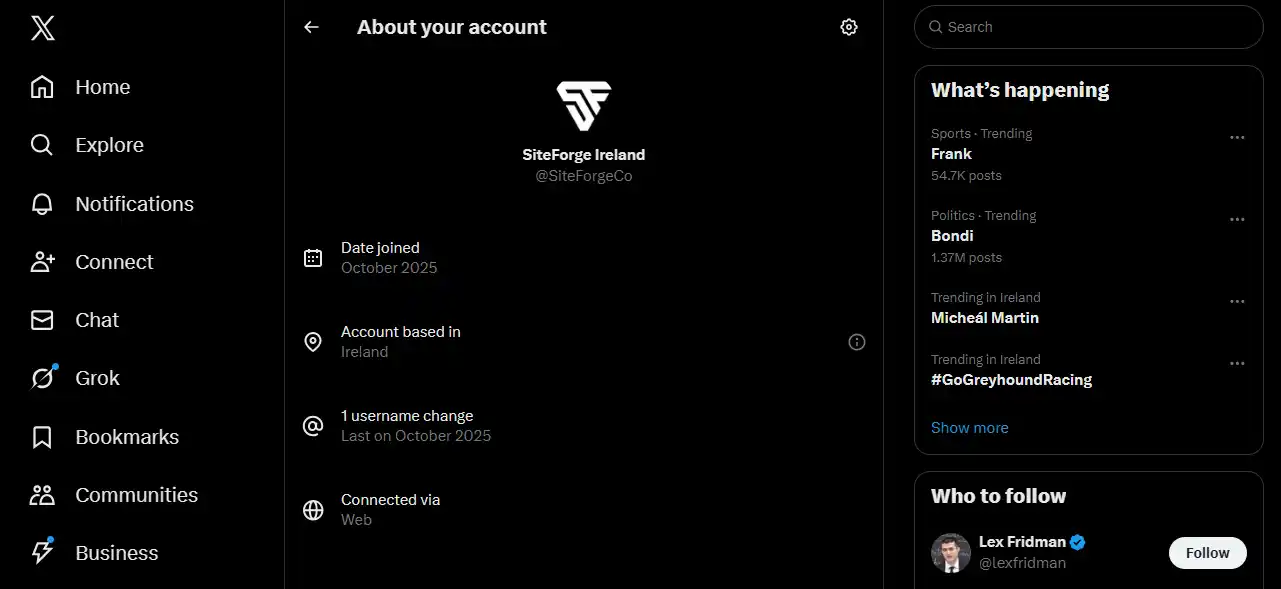
- X now displays the country or broader region an account is considered to be “based in.”
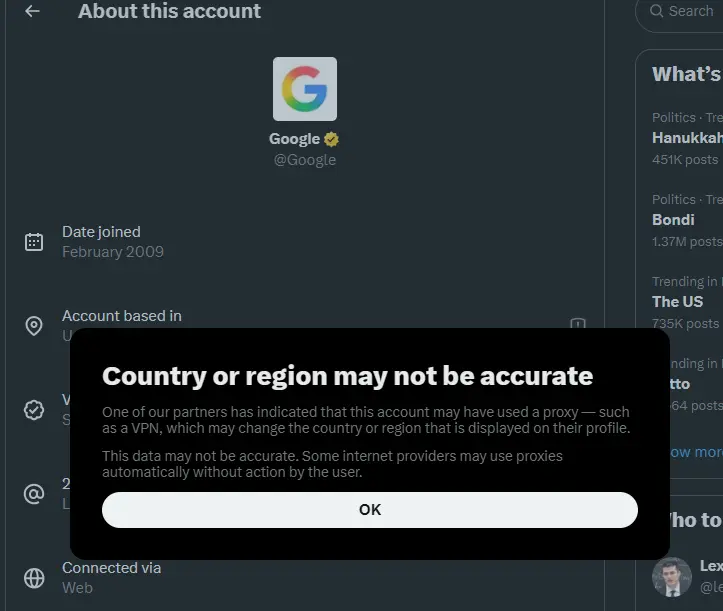
- Some profiles include warnings indicating that the displayed location may be inaccurate, particularly when access patterns suggest the use of VPNs or proxy services.
- The information is derived from multiple technical signals, including IP-based data, app store region, and login behavior.
- The data is presented as contextual information, not as verified proof of a user’s real-world residence.
These details are publicly visible via the “About this account” section on many profiles.
What the Feature Has Revealed
Shortly after the feature became available, users began noticing discrepancies between how accounts presented themselves and the locations shown by X.
Observed examples include:
- Accounts presenting themselves as local political commentators, while the “based in” label pointed to a different region.
- Political discussion profiles claiming firsthand knowledge of local events, yet marked as operating outside the region they frequently comment on.
- High-engagement public-interest accounts focused on one country, while their metadata suggested activity originating elsewhere.
- Accounts posting from mobile apps downloaded in one region, while login activity was associated with another country, sometimes accompanied by a VPN accuracy warning.
These cases increased scrutiny of politically active and opinion-driven accounts, particularly during discussions involving elections, international conflicts, and public policy.
Accounts With Limited or Hidden Location Data
Not all profiles display full location details. Limited or missing information has been observed most often on:
- Institutional accounts
- Large organizations
- Verified public figures
- Accounts subject to additional security protections
In such cases, X appears to restrict the visibility of certain metadata for safety or operational reasons.
Authenticity and Accuracy of the Data
While the feature increases transparency, X does not claim that the displayed location is always precise. The platform acknowledges that:
- IP-based location data can be inaccurate or outdated
- VPNs, corporate networks, and mobile carriers can distort geographic signals
- Frequent travel or remote work can result in mixed location indicators
For this reason, the information is treated as indicative rather than definitive, serving as context rather than confirmation of identity or permanent residence.
X will show a warning on your account if you try to use a VPN to hide where your account is from when the upcoming "About Your Account" feature launches.
— Aaron (@aaronp613) November 15, 2025
"One of our partners has indicated that you may be connecting via a proxy—such as a VPN—which may change the country or… pic.twitter.com/vAOus842Br
Regulatory Context: EU Fine Over Verification Practices
In December 2025, the European Commission imposed a €120 million fine on X for violations of the Digital Services Act (DSA). The ruling focused primarily on the platform’s paid blue checkmark verification system, which regulators determined could mislead users by implying identity verification where none meaningfully existed.

Additional concerns included insufficient advertising transparency and limited access to public data for independent researchers. Regulators argued that these practices increased the risk of impersonation, scams, and information manipulation.
Could Location Transparency Lead to Another Fine?
At present, there is no indication that the European Union plans to fine X over its account location transparency feature. No formal investigation or enforcement action has been announced in relation to the display of location metadata.
However, any feature involving user data may come under regulatory review if concerns arise regarding privacy or legal compliance. For now, EU enforcement under the DSA remains focused on verification practices, advertising transparency, and data access rather than location indicators.
Conclusion
The introduction of account location and VPN indicators on X marks a notable shift toward greater visibility into how accounts operate. Combined with increasing regulatory pressure, the change highlights the platform’s evolving approach to transparency and accountability.
While the data is not flawless, it adds an additional layer of context that, when used responsibly, can support more informed and critical engagement on the platform.